API Status

100% uptime - independently verified


If your app touches money in more than one currency, August 2026 has been quietly auditing your architecture - whether you asked it to or not.
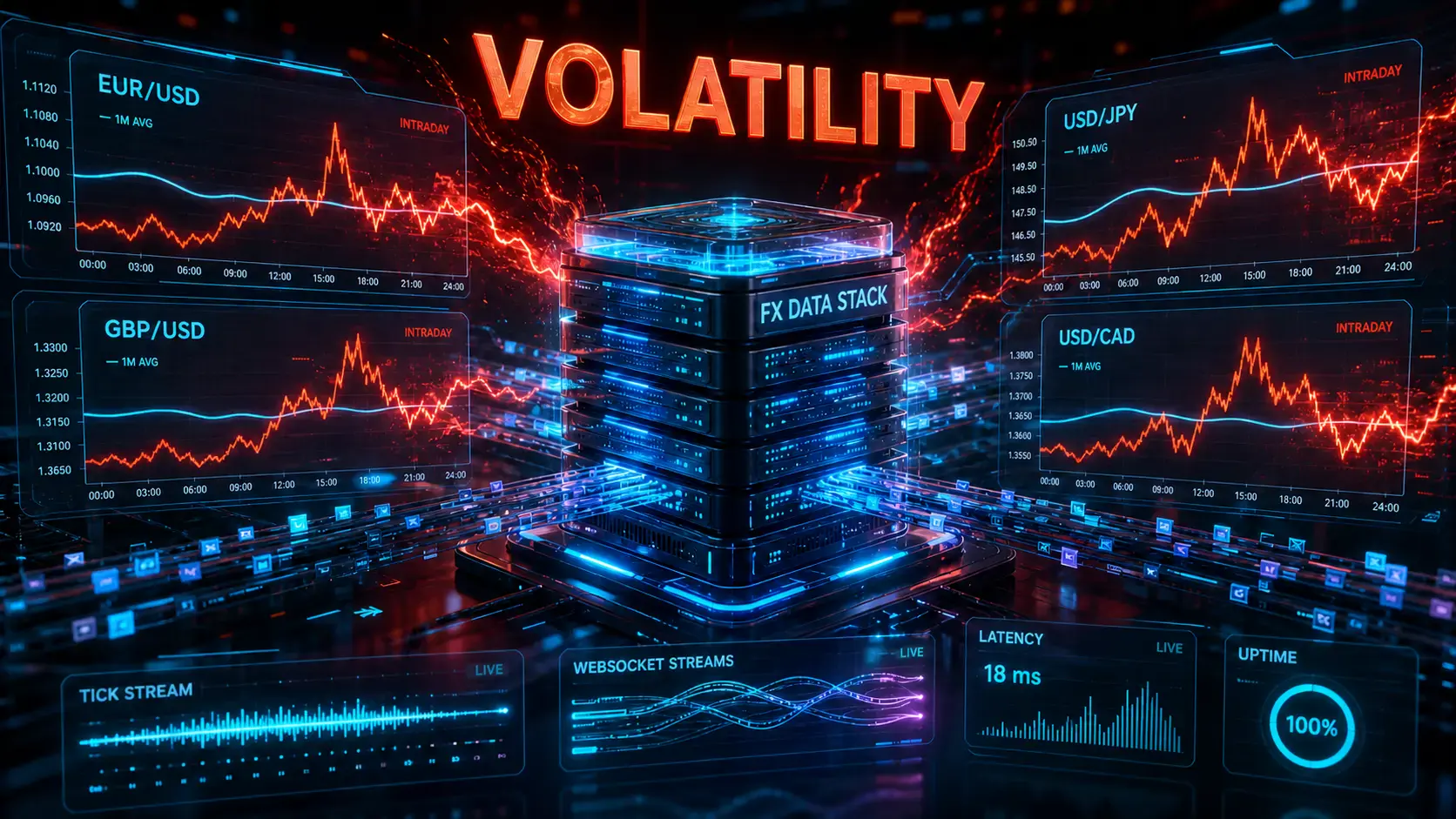
On paper, the headline pairs look calm. EUR/USD has spent the month drifting around 1.16, GBP/USD near 1.35. But underneath those tidy monthly averages, the FX market is anything but sleepy. The Fed is holding rates at 3.50%-3.75% with a visibly hawkish split - several policymakers have argued for a hike, not a cut - while markets price only a handful of basis points of movement into September. Eurozone inflation has crept back up to 2.9% on the back of volatile energy prices. The yen has been whipsawed by intervention chatter. New US tariffs on Canadian goods landed mid-month, jolting USD/CAD. And the Fed's late-August Jackson Hole symposium is looming, with traders braced for a single sentence to reprice the entire curve.
Averages hide all of that. Your users don't live in averages - they live in the thirty seconds between checkout and payment confirmation.
Here's the uncomfortable question this month keeps asking: when your application shows a customer a price in their currency, how old is the rate behind it?
In a placid market, staleness is a rounding error. A rate cached for an hour might drift a few pips; nobody notices. But August's regime is different. When an Federal Open Market Committee (FOMC) minutes release, a surprise CPI print, or a Jackson Hole soundbite can move a major pair meaningfully within minutes, a stale rate stops being a rounding error and starts being a real cost - margin you silently give away, or a price your customer rightly disputes.
The failure modes are familiar to anyone who has run a cross-border product through a volatile stretch:
E-commerce and marketplaces
You quote in the buyer's currency but settle in your own. If your displayed rate lags the market by an hour during a sharp move, you're either eating the difference or passing surprise costs to customers. Multiply by thousands of transactions and "we refresh rates daily" becomes a line item on your P&L.
Fintech and remittance apps
Users compare you against the mid-market rate in real time - they have the same phones you do. Show them a number that's visibly off from what Google shows and you don't just lose a transaction, you lose trust.
Treasury and invoicing tools
A CFO reconciling August's invoices needs to know what EUR/USD actually was at 14:32 on the day the tariff news hit - not the daily fixing. Historical accuracy at real timestamps is the difference between clean books and a week of email archaeology.
Trading-adjacent products
Anything showing charts, alerts, or P&L needs OHLC data at a granularity that matches how fast the market is actually moving. Daily candles were fine in a quiet spring. They are not fine in a month where intraday ranges do the work of weekly ones.
The instinct is to treat months like this as a trading story. For most builders, it's really an infrastructure story. The market moving fast isn't your problem; your data moving slowly is.
A few questions worth putting to your stack this week:
How fresh is fresh?
"Real-time" is a marketing word until you put a number on it. Is your provider updating every 60 seconds? Every second? Streaming bid/ask over WebSockets? Different products need different answers - a content site converting article prices can live with minute-level updates; a payments flow probably can't during a Jackson Hole week.
What happens at 9:00 p.m. on symposium day?
Volatility spikes are exactly when free-tier and hobbyist rate sources degrade - rate limits, delayed updates, outright downtime. The moments your users most need accurate rates are the moments cheap data is least likely to deliver them. Uptime SLAs sound boring until the one afternoon they aren't.
Can you replay the past?
When a customer disputes a conversion or an auditor asks how a figure was calculated, you need historical rates at the actual timestamp - ideally with decades of depth behind them, because "our data starts in 2023" is a sentence nobody wants to say to an auditor.
Is one currency pair enough anymore?
Tariff shocks have a habit of spreading. This month's USD/CAD move ripples into MXN, into commodity currencies, into any pair that shares a leg with the dollar. If your product only tracked the majors because "that's where our users are," volatile months are when the long tail suddenly matters.
Nobody knows what comes out of Jackson Hole, whether the Fed's hawks win the argument, or where oil-driven inflation goes next. That's precisely the point: you can't architect for a specific headline. You can only architect for the category of month we're in - one where rates move fast, move often, and move on news that drops without warning.
The practical checklist is short. Consume rates from a source that updates at the cadence your product actually needs, not the cadence that was fine last year. Cache deliberately, with TTLs you chose on purpose. Keep historical data deep enough to answer questions about any timestamp a customer or auditor might care about. And make sure the whole thing holds up under load on the days that matter, because five-nines reliability is only impressive when the market is trying to break it.
Quiet markets forgive lazy data pipelines. Months like this one grade them. If August has exposed a gap between the rates your app shows and the rates the market is actually trading, that's not bad luck - it's a to-do list.
fastFOREX serves real-time and historical rates for 160+ currencies, with updates as fast as every second, WebSocket streaming, and 55+ years of historical data - starting at $18/month with a free 7-day trial. Start building